Gayu 臥遊
Travels in Japan, from a pillow
When Zong Bing of the Southern Dynasties grew too old to climb the famous mountains, he hung landscape paintings on his walls and said he would "travel through them lying down" (臥遊, gayu). This site puts 812 works back where they were drawn: Sesshū's (1420–1506) National Treasures and the landscape prints of Edo-period artists such as Katsushika Hokusai (1760–1849), Utagawa Hiroshige (1797–1858) and Keisai Eisen (1791–1848). You can make the journey without getting up.
今日の一枚 · Print of the day
One print a day from the part of the original table of contents (spring, summer, autumn, winter) that matches today's season.
See it on the map-
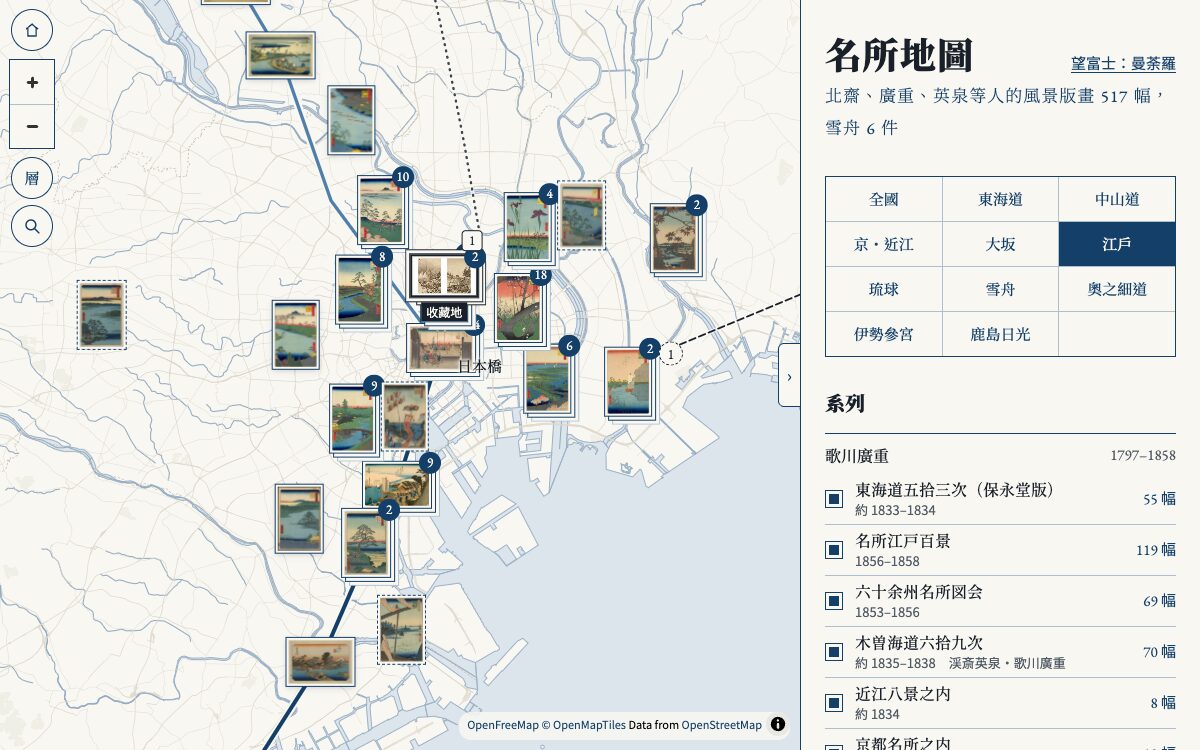
Map of famous places
Hiroshige: Tōkaidō gojūsan tsugi, Meisho Edo hyakkei, Rokujūyoshū meisho zue and more · Eisen and Hiroshige: Kisokaidō rokujūkyū tsugi · Hiroshige II: Tōto sanjūrokkei, Shokoku meisho hyakkei · Kunikazu, Yoshitaki and Yoshiyuki: Naniwa hyakkei · Hokusai: Shokoku taki meguri, Shokoku meikyō kiran, Ryūkyū hakkei · Kamigata views by Sadanobu, Yoshikuni and Sadahide · Tani Bunchō: Nihon meizan zue · Kawase Hasui: shin-hanga before 1930 · Sesshū's 6 National Treasures
730 works on a real map, searchable by title, place and artist. The Tōkaidō and the Nakasendō run as two roads from Nihonbashi to Kyoto. Each Tōkaidō station also has Hiroshige's later vertical version, and most have the 1797 Tōkaidō meisho zue; the Nakasendō has the 1805 Kisoji meisho zue, which goes on to Kashima and Nikkō. You can zoom into the streets of Edo for the Meisho Edo hyakkei: 69 of them sit beside the same place in the Edo meisho zue of about 20 years before, and 28 beside Hiroshige II's Tōto sanjūrokkei of five years later. Osaka is covered by the 100 Naniwa hyakkei, Kyoto and Lake Biwa by several Kamigata series, and the whole country by the Rokujūyoshū meisho zue, one print for each province, and Tani Bunchō's Nihon meizan zue gives 90 pictures of mountains, one mountain each, as far north as Yōtei and Usu in Ezo. The routes are Sesshū's life journey (from Bitchū and Yamaguchi across the sea to Ming China), Bashō's Oku no hosomichi, and the pilgrim road of the Ise sangū meisho zue from Seki no oiwake to Futamigaura; the Kannon pilgrimages of Saigoku and Chichibu follow the Kannon reigenki, one sheet per temple.
Enter -
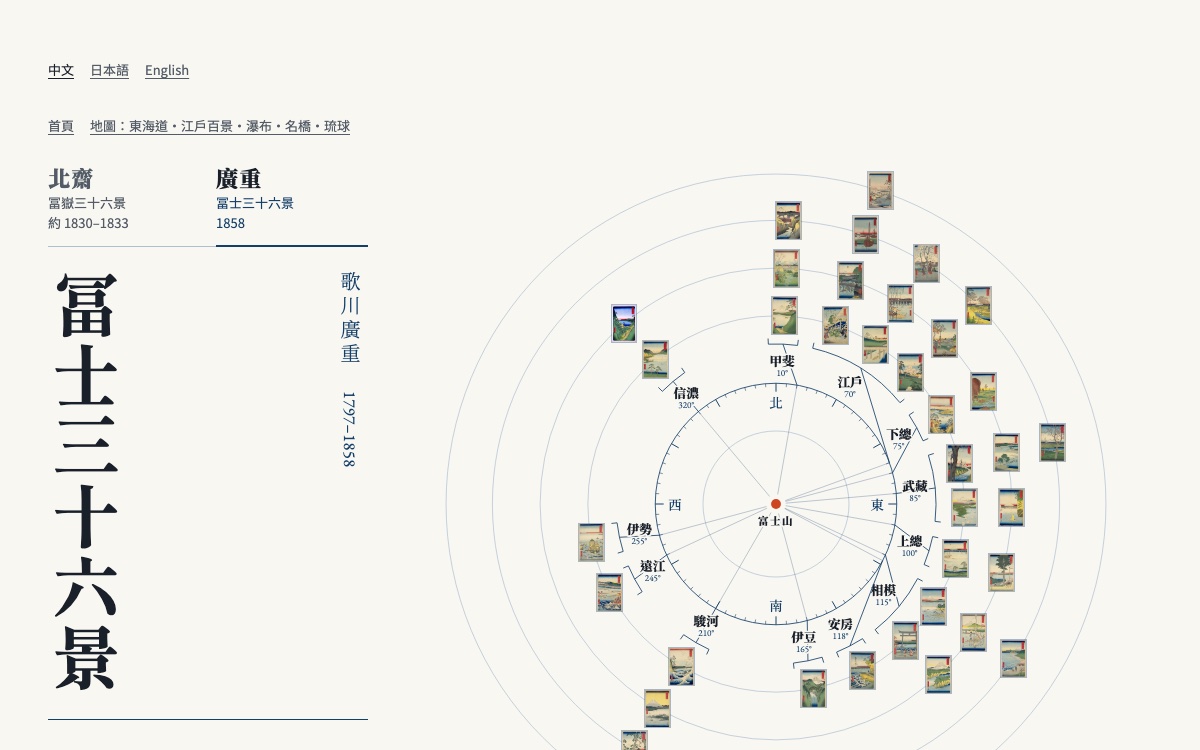
Views of Fuji: a mandala
Hokusai: Fugaku sanjūrokkei, 46 prints · Hiroshige: Fuji sanjūrokkei, 36 prints
Mount Fuji at the centre. Each print sits in the rough direction, seen from the summit, of the old province it shows. Switch between the two artists to compare.
Enter -
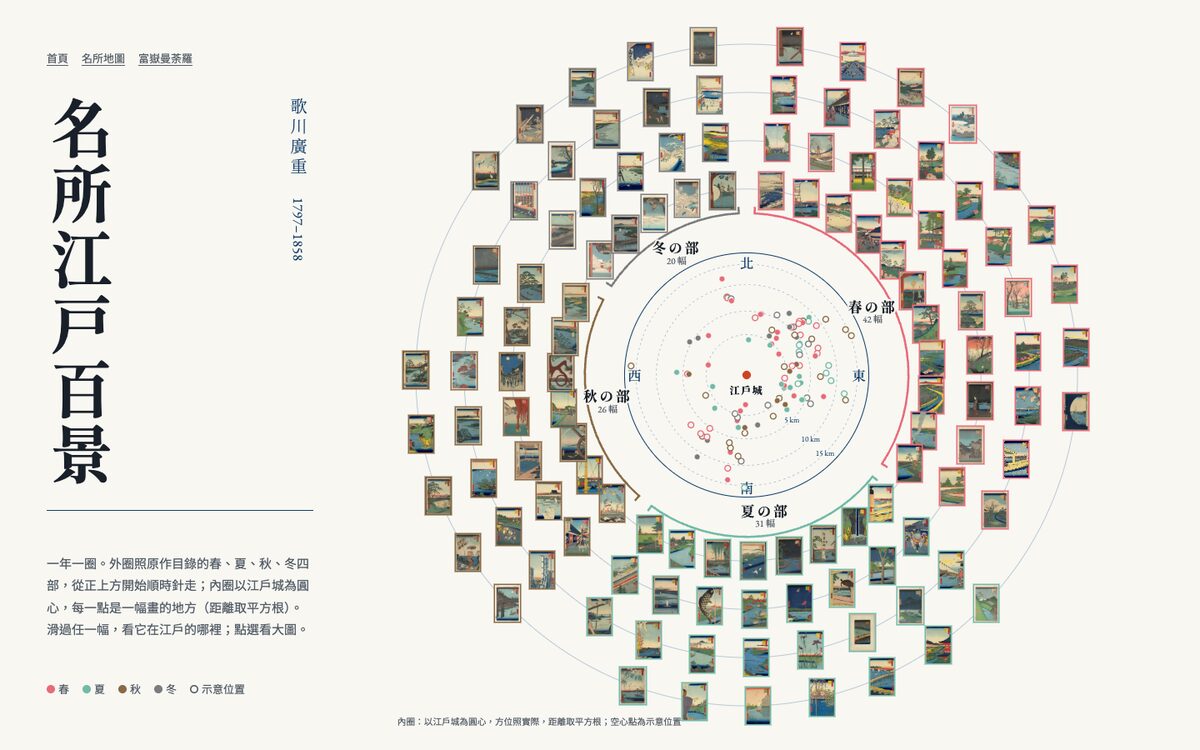
A year in Edo
Hiroshige: Meisho Edo hyakkei, 119 prints
The spring, summer, autumn and winter sections of the original table of contents, going clockwise from the top as one year. Inside the ring, Edo Castle is the centre and each dot is the place of one print, so you can read season against place.
Enter
Themes
Into the map of famous places by way of one theme.
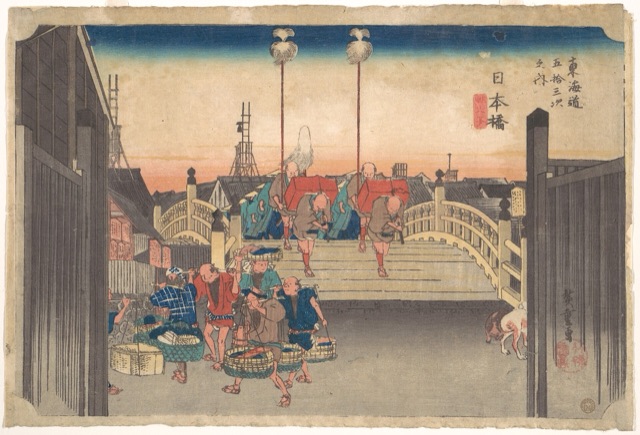
Tour the Tōkaidō
One click and the map flies from Nihonbashi along the Tōkaidō, station by station, to Kyoto, showing Hiroshige's Hōeidō print at each. The Nakasendō, Oku no hosomichi and the other routes can be toured the same way.
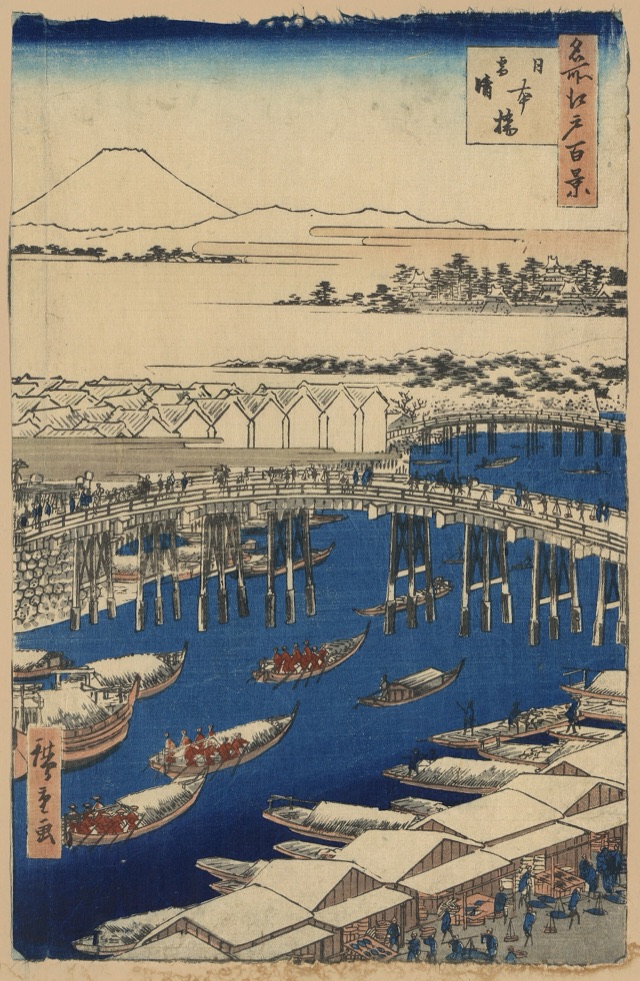
Nihonbashi, eight times
The same bridge in eight series, from the Tōkaidō meisho zue of 1797 to the Tōto sanjūrokkei of 1862, in order of date. 62 places on the site can be compared this way.
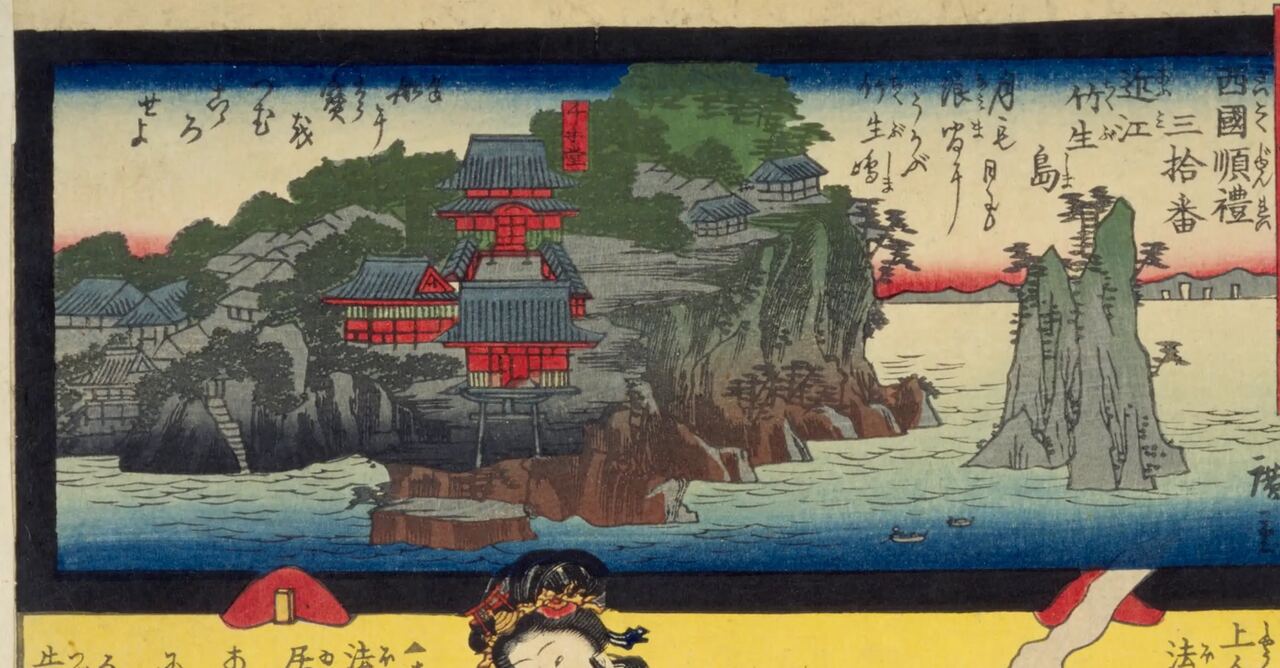
Kannon pilgrimages: Saigoku and Chichibu
The Kannon reigenki has one sheet per temple: Hiroshige II's view of the temple at the top, the temple's miracle tale below. 33 temples of Saigoku, 34 of Chichibu.
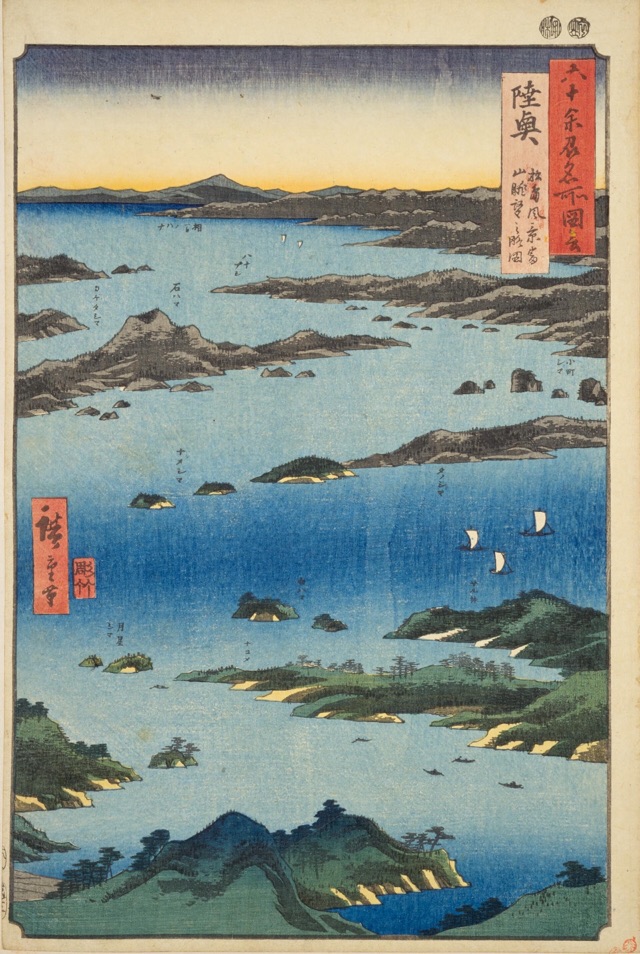
Oku no hosomichi
Bashō's journey of 1689 in 33 stops, most with a haiku, with Yosa Buson's Oku no hosomichi zu and, at some stops, Hiroshige's view of the same place.
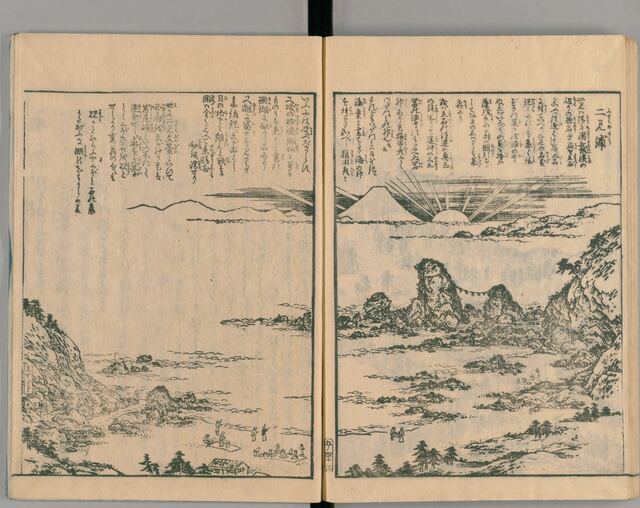
Ise pilgrimage
The Ise sangū meisho zue (1797) from Seki no oiwake to Futamigaura, each of the 15 stops with one spread from the book.
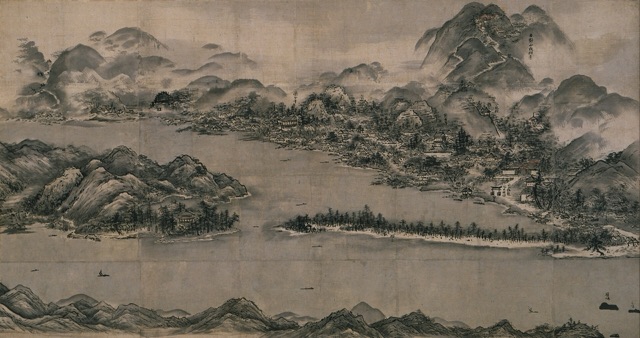
Sesshū's travels
Sesshū's life journey: Bitchū, Kyoto and Yamaguchi, across the sea to Ming China, and late in life the Ama no hashidate zu. Six National Treasures.
Another way to show the Fugaku sanjūrokkei
- Aizuri: the whole page laid on Prussian blue, from dawn to sunset